Coastal conditions

Salt does not wait for a storm.

Salt aerosol lands on Cape Fear glass every day the surf is up. Left long enough it stops being a film you can wash and becomes damage in the glass itself.

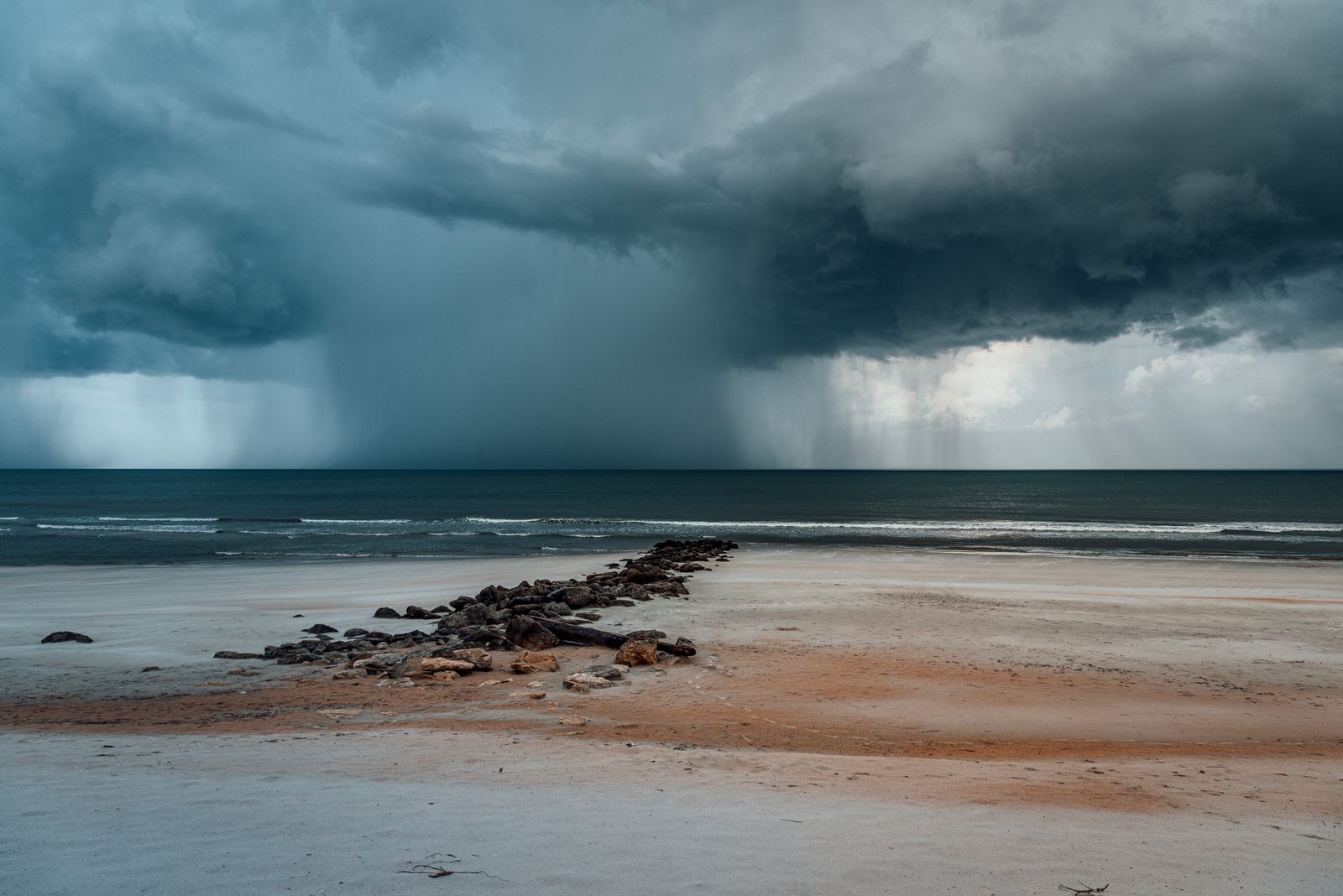
Coastal weather over the shoreline

The mechanism

How the deposit forms

Breaking waves throw fine droplets into the air. The water evaporates on the way inland and leaves a salt particle small enough to travel on an ordinary sea breeze. On Wrightsville Beach that happens every day the surf is running, which is most of them.

A pane facing east starts collecting the moment it is cleaned. You do not see it at first because individual crystals sit far below what the eye resolves. What you notice at week six is not new dirt arriving, it is the accumulated layer finally reaching the density where it scatters light.

Salt is also hygroscopic, meaning it pulls moisture out of the air. Overnight, coastal humidity gives every crystal a film of water to sit in, and by dawn the layer has effectively rewetted itself and bonded a little more firmly. That daily wet and dry cycle is what turns a cosmetic film into a chemical problem over years.
Grading

Three stages, three different jobs

We grade every restoration before quoting it, using a free test patch on one representative pane. The grade decides the method, the price, and whether restoration is worth doing at all.

01

Stage 1: Surface deposit

How it feels
Smooth to a fingernail. Visible only at a low angle or in raking light.
What fixes it
A dwell-time mineral dissolver and a white pad. No glass is removed and the pane returns to clear.
Typical exposure
Weeks to a few months of exposure
02

Stage 2: Early etch

How it feels
A faint drag under a fingernail. A cloudy band, usually along the bottom third of the pane.
What fixes it
Cerium oxide polish with a variable-speed machine. Removes a microscopic layer of glass. Done well the pane is clear; done badly it is distorted.
Typical exposure
One to three years of untreated exposure
03

Stage 3: Deep etch and pitting

How it feels
Clearly rough. Pitting visible at a low angle without magnification.
What fixes it
Replace the unit. Polishing enough to clear the pits distorts the view through the pane, and we will say so in writing rather than take the work.
Typical exposure
Several years, or shorter with irrigation mineral

Stage 3 is a replacement conversation. We would rather tell you that than sell a polish that leaves you with a distorted pane.

Between visits

Four things that slow it down

  1. Hose the exposed elevations

    Ten minutes with plain water every fortnight knocks the bulk of the salt off before it bonds. Tap water spots as it dries, so it is not a substitute for a clean, but it meaningfully slows the progression.

  2. Move any sprinkler that reaches the glass

    Irrigation mineral is far more aggressive than salt. On most coastal properties the sprinkler is doing more permanent damage than the ocean is.

  3. Keep the gutters clear

    Overflow at a gutter corner sends mineral-laden water down the wall and across the window below. That is a surprisingly common cause of a single badly stained pane.

  4. Do not wipe a dry, salted pane

    Dry salt crystals are abrasive. Wiping them with a cloth grinds them across the surface. Flood the glass with water first, always.

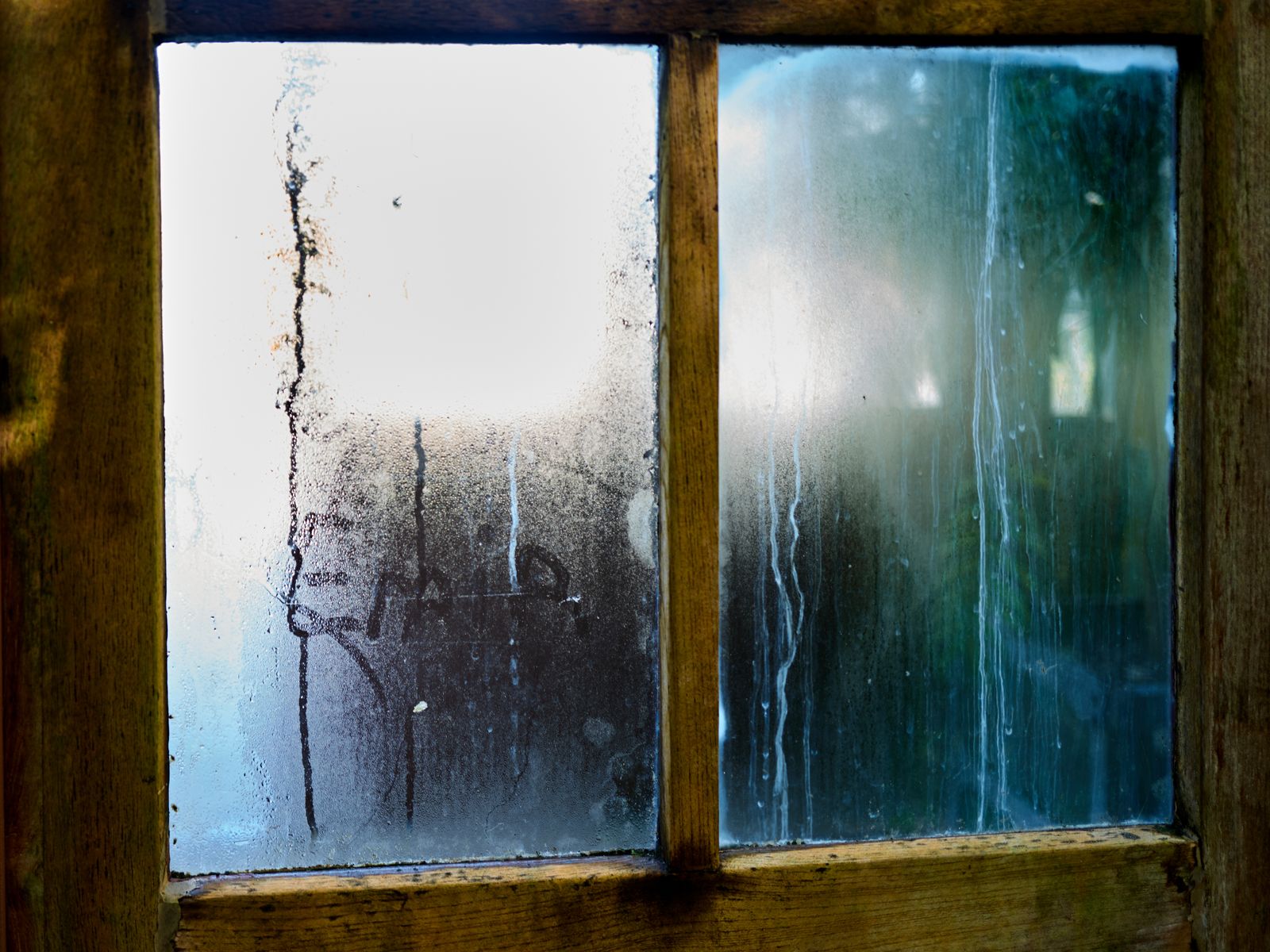
Mineral spotting on a pane of glass

Frequency by environment

The Cape Fear glass year.

How often your glass needs attention is not a preference, it is a function of what lands on it. Salt, pollen, irrigation mineral and construction dust each have their own season on this coast, and each wants a different answer.

  1. January to February

    Low sun, high salt

    Salt aerosol, no pollen

    Winter is not a break on this coast. Salt deposition runs year-round, and the low winter sun angle makes an existing film far more visible from inside a room than it is in June. Oceanfront glass still wants its eight-week visit.

    Oceanfront and sound-front: keep the 8 week cycle. Inland: nothing needed.

  2. Late February to early May

    Pine pollen

    Longleaf and loblolly pollen fall

    The heaviest soiling window of the year, and the one most people waste money on. Cleaning glass during the drop is cleaning it twice: a fresh yellow layer lands within days. Wooded inland lots in Leland and Brunswick Forest take the worst of it.

    Do not book a full clean in March. Wait for the drop to finish.

  3. Mid-May

    The spring reset

    Pollen has stopped falling

    The single most valuable visit of the year for inland and near-coastal homes. Glass, screens, tracks and sills all come back at once, after the pollen has stopped and before the summer humidity bakes anything onto the surface.

    Inland Annual clients: this is your visit. Coastal Standard: visit one of two.

  4. June to August

    Irrigation and salt

    Sprinkler mineral, salt aerosol, dust

    Irrigation runs daily and this is when hard water damage actually happens. A droplet landing on hot glass evaporates in seconds and leaves its calcium behind. Three summers of that turns surface deposit into etch that no wash will remove.

    Walk your property mid-cycle and move any head that reaches the glass.

  5. June to November

    Storm season

    Wind-driven salt, sand and debris

    After a named storm, the first 96 hours decide whether the deposit rinses off or bonds. Wind-driven salt gets forced into tracks, weep holes and screen mesh along with sand and pine straw. Left for a fortnight, packed wet sand in a slider track has to be dug out.

    Post-landfall flush within 96 hours. Plan clients get priority slots.

  6. September to November

    Oak tannin and leaf litter

    Leaf drop, tannin staining, gutter load

    Oak drip leaves a brown tannin film on glass and sills that plain water does not shift. This is also the point where gutters fill, overflow at the corners, and start sending mineral-laden water down the wall and across the window below.

    Clear gutters first, then clean glass. Doing it the other way round wastes the visit.

  7. December

    Interiors before the holidays

    Low sun, indoor months

    Exteriors can wait. Interiors cannot, because the low December sun comes straight through the glass at eye level and shows every mark. Most of our December work is interior-only visits.

    Interior-only visit at plan rate. Exteriors resume in the new year.

Frequency planner

How often does your glass need us?

Interval is a function of exposure, not of house size. Four questions about where the property sits and what lands on it will get you within a fortnight of the right answer.

01 How far is the property from the ocean or the Intracoastal Waterway?
02 What is the tree cover around the house?
03 Does sprinkler spray reach the glass?
04 Is there active construction within a block?

Recommended interval

Every 22 weeks

About 2 visits a year

Closest plan: Coastal Standard

    Book a free count

    A planning guide, not a quote. A technician confirms the interval on the first visit and adjusts it by elevation where the water-facing side needs more than the street side.

    Free stage test

    We will grade one pane before you spend anything.

    A test patch on a representative pane tells you whether you are at stage 1, 2 or 3. It is free and it takes about twenty minutes.

    Insured and IWCA. Certificates issued to your property manager on request.

    Cookie preferences

    Choose which cookies you allow. You can change this at any time from the link in the footer.