The paperwork is real
Anchor certification, rescue plan and exclusion-zone plan exist as documents, not as verbal assurances. Your risk manager can read them.
Glass
Rope descent, boom lift and extended water-fed pole work on buildings above two storeys.
Overview
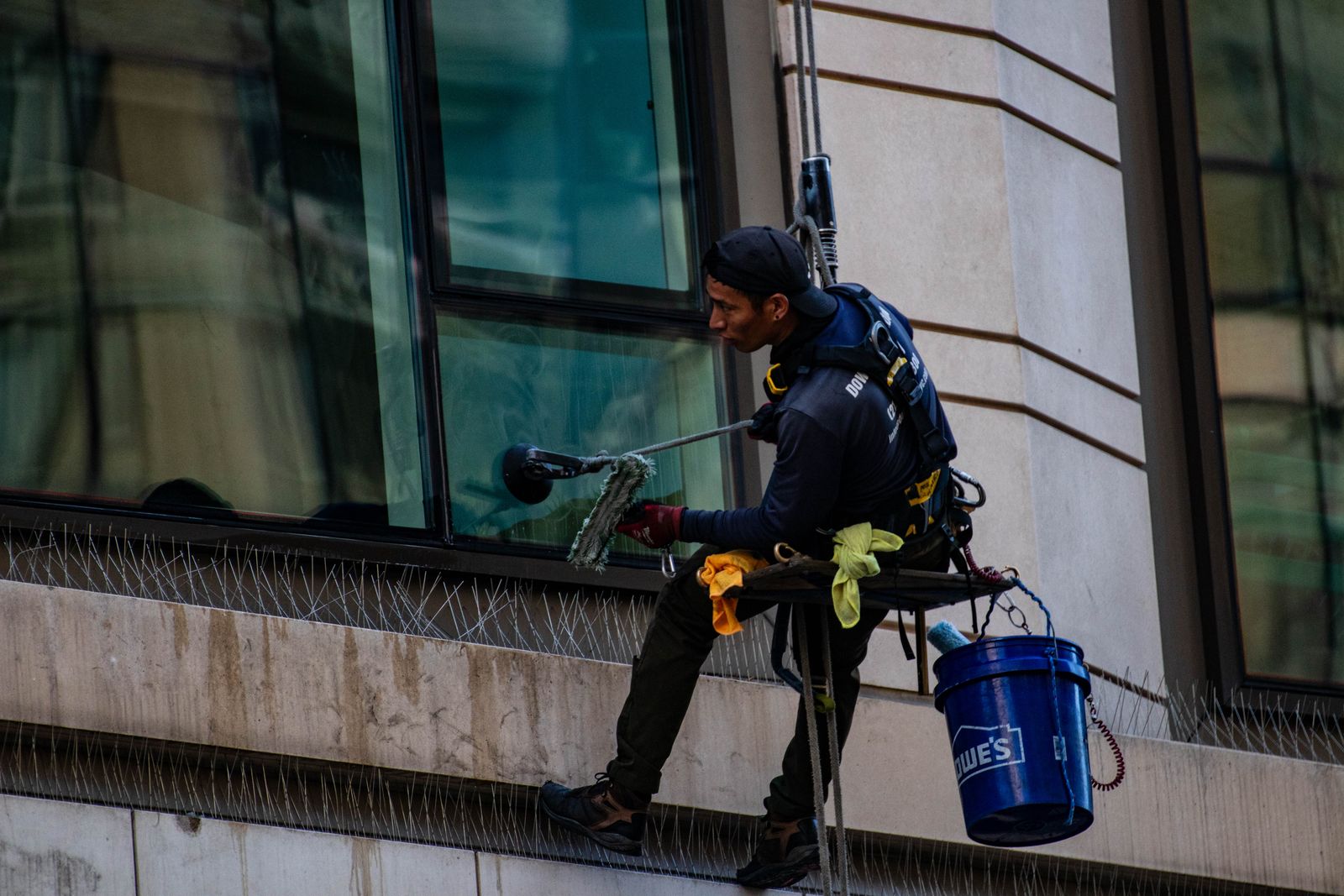
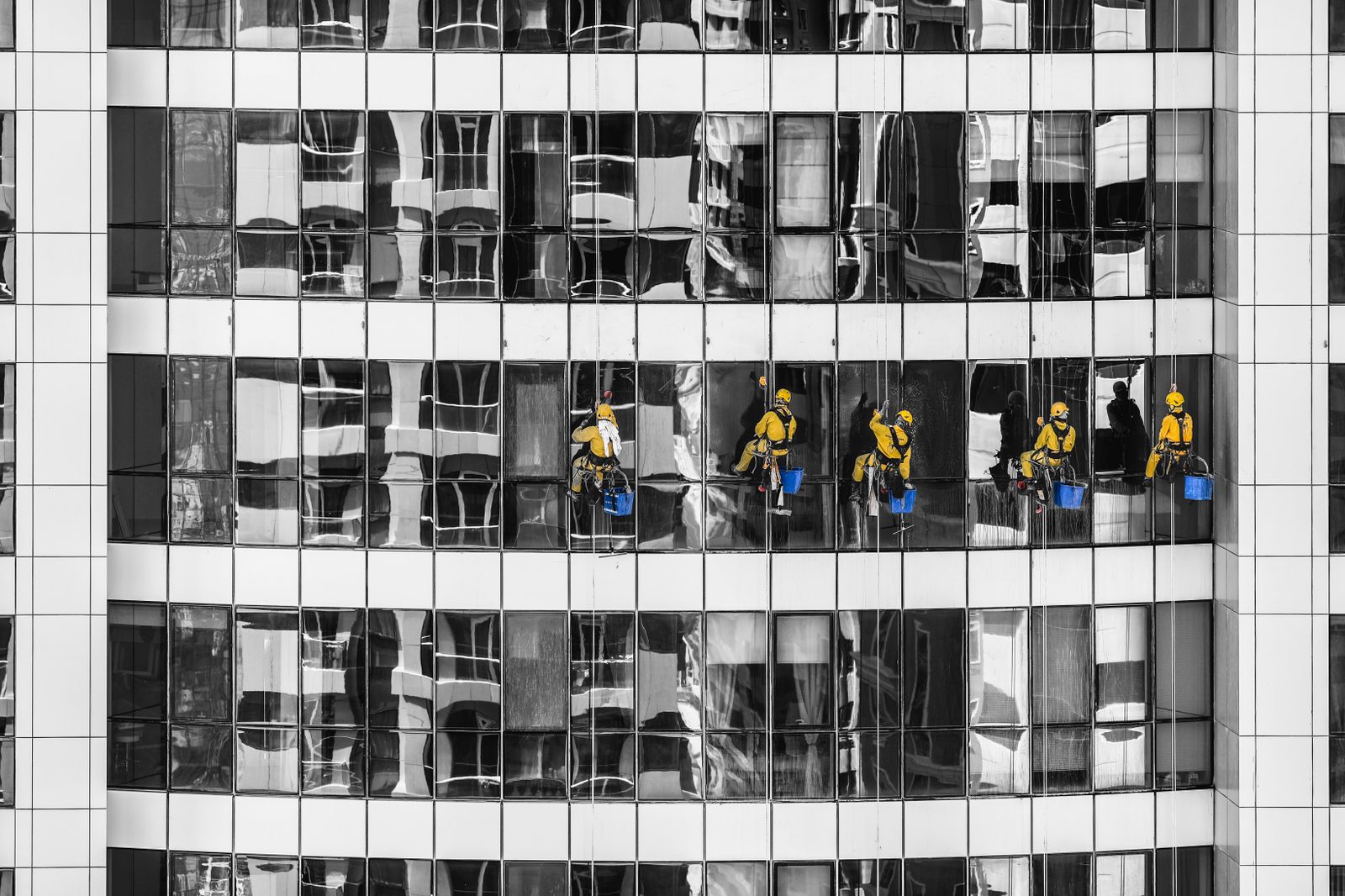
Above the second storey, the question stops being about glass and starts being about access. Three methods cover almost everything on the Cape Fear coast: a water-fed pole reaches comfortably to about four storeys in calm conditions, a boom or scissor lift covers anything with hard standing beside it, and rope descent covers the rest.
Rope descent work is governed by OSHA 1910.27 and 1910.140. That means certified anchorages tested to 5,000 pounds, written anchor certification on file with the building, a second independent lifeline for every descent, and a documented rescue plan before the first technician leaves the parapet. We will not descend a building whose anchors have no current certification letter, and we will tell you plainly if that is the blocker.
Scope
Method
Order matters. Most damage in this trade comes from doing the right steps in the wrong sequence.
We photograph every elevation, locate anchors, measure parapet heights and identify obstructions such as sunshades, signage and balcony rails.
Pole to four storeys where wind allows, lift where hard standing exists, rope descent where neither works. Most buildings use two of the three.
Anchor certification, rescue plan, exclusion-zone plan and insurance certificates go to the building manager before any technician is on rope.
Top-down drops, glass washed and squeegeed at each level, frames wiped, with a spotter on the ground for the full descent.
Elevation-by-elevation report with photographs of any cracked glass, failed sealant or damaged gaskets.
Why it is worth it
Anchor certification, rescue plan and exclusion-zone plan exist as documents, not as verbal assurances. Your risk manager can read them.
If a pole reaches it, we use a pole. Rope is slower and more expensive, so we reserve it for the elevations that need it.
Rope descent stops at sustained 25 mph, which on this coast happens often. You get a rescheduled date, not an unsafe crew.
Pricing factors
Every figure on this site is a sample. A real number follows a count on site.
| Factor | Effect |
|---|---|
| Number of drops | Each rope drop is a fixed block of time. Elevation width drives how many drops a facade needs. |
| Anchor status | Certified anchors are straightforward. Uncertified anchors mean an engineer visit first, which we can coordinate. |
| Obstructions | Balconies, sunshades, signage and setbacks all add drops. |
| Glass type | Reflective and tinted coatings on commercial curtain wall dictate which tools can touch them. |
Questions
Anything not covered here, call and ask. You will reach someone who has done the work.
Carbon-fibre poles are made to about 65 ft, but practical reach in coastal wind is four storeys. Past that the pole flexes too much for controlled contact.
For rope descent, yes, plus access to the anchor points and a place to rig. For pole and lift work, no.
Sustained 25 mph or gusts over 30 mph stop rope descent. Lift work has its own manufacturer limit, usually 28 mph.
Not on rope. We can often still reach the first four storeys by pole and quote the rest once an engineer certifies the anchorages.
Often booked together
Storefront, office, restaurant and hospitality glass on a fixed route, billed monthly.
Deionised water, soft brush, no detergent. Documented before and after output on monitored systems.
Low-pressure soft wash for siding and roofs, controlled pressure for hardscape.
Free estimate
No sales visit. A technician counts the glass, checks the storey and the coating, and sends a written figure the same day.
Insured and IWCA. Certificates issued to your property manager on request.
We value your privacy
We use cookies to run this site, remember your preferences and understand how it is used.Cookie policy