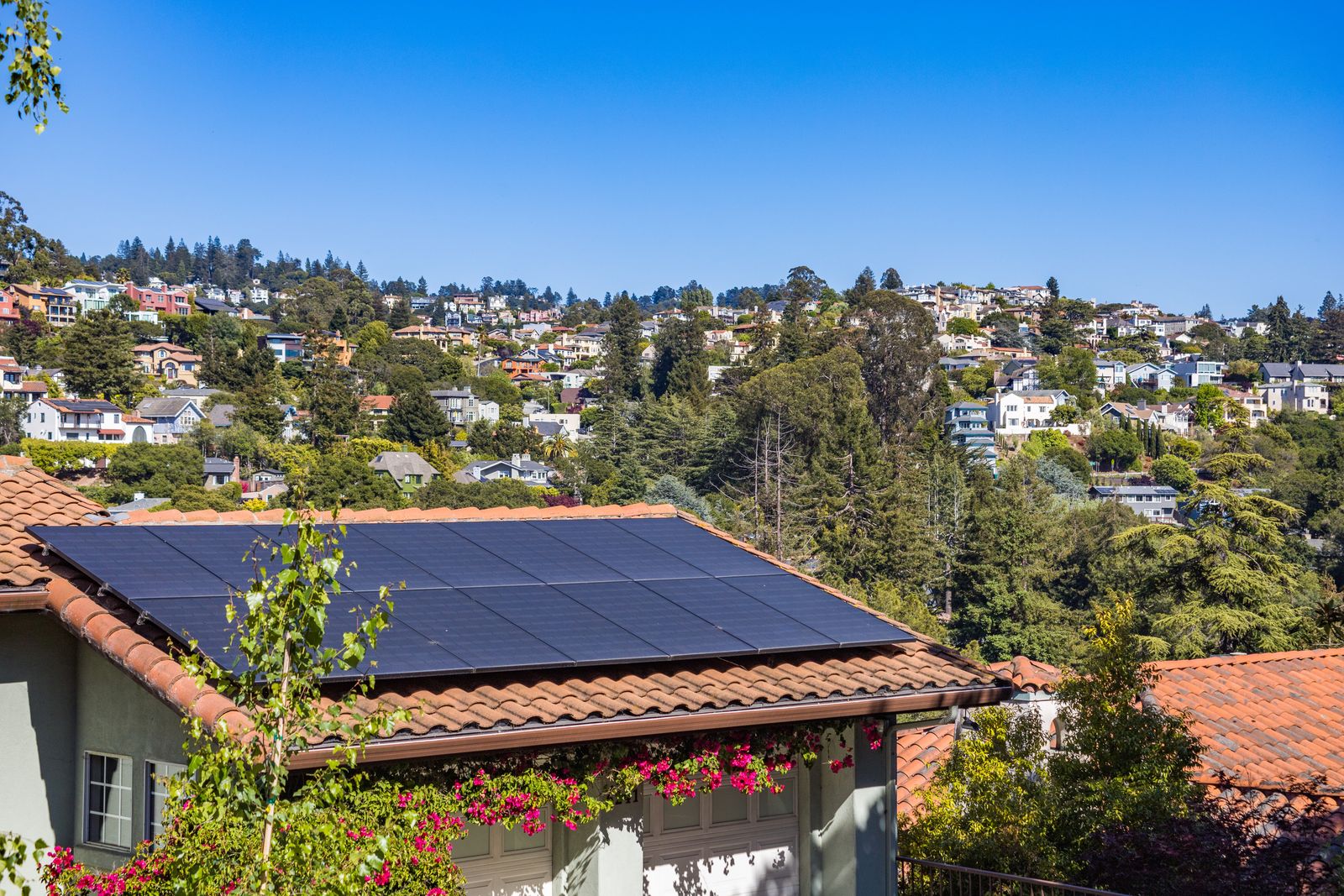
Residential window cleaning
Interior and exterior glass, sills, sashes and frames on houses from cottages to oceanfront builds.
From $189 exterior-only, sample
Booking mid-May spring resets now
Wilmington, Wrightsville Beach and the Cape Fear coast. Pure-water exteriors, hand-finished interiors, and a visit interval matched to your salt exposure.
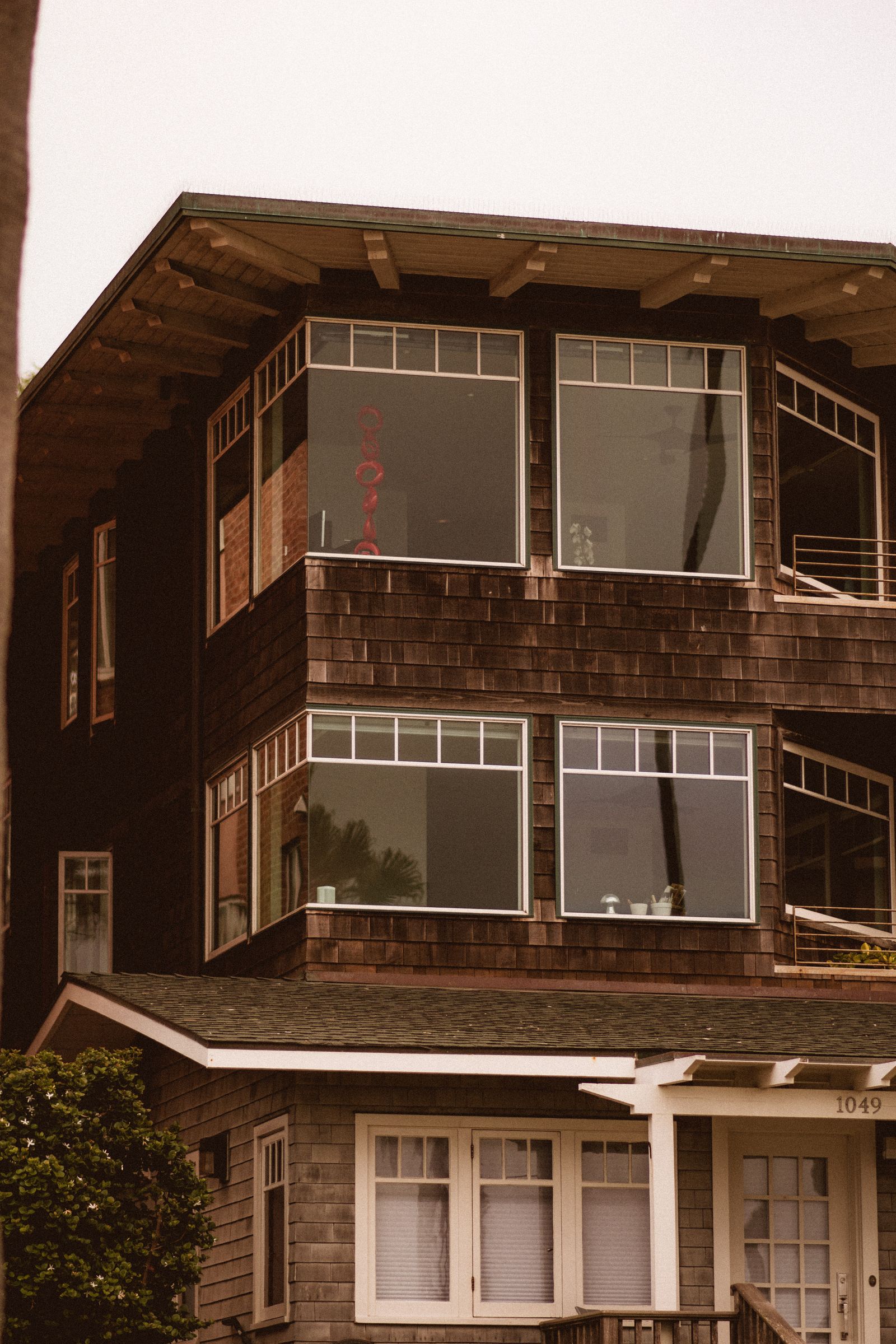
Eight services, one crew
We started on storefront glass and everything else on this list exists because it was making the glass dirty again: gutters overflowing onto sills, sprinkler mineral, algae on the siding above the window head.
Interior and exterior glass, sills, sashes and frames on houses from cottages to oceanfront builds.
From $189 exterior-only, sample
The number that sets your price
28
Panes on a typical 1,400 to 2,200 sq ft single-storey Wilmington home. A double-hung window counts as two, a slider counts as two, a picture window counts as one whatever its size.
Count yours in the estimatorDeionised water, soft brush, no detergent. Documented before and after output on monitored systems.
Storefront, office, restaurant and hospitality glass on a fixed route, billed monthly.
Rope descent, boom lift and extended water-fed pole work on buildings above two storeys.
Screens removed, washed and re-seated. Sills, tracks and weep holes cleared of coastal grit.
Staged restoration for sprinkler spotting, salt etch and construction overspray on glass.
Hand cleared, bagged, downspouts flushed and flow tested. Pine needles included.
Low-pressure soft wash for siding and roofs, controlled pressure for hardscape.
Pane-count estimator
Every window-cleaning quote comes down to one number: how many glass units are on the property, and how hard each one is to reach. Set the inputs and the figure moves in front of you. Sample rates.
Estimated visit
$318 to $404
28 panes, in and out, single storey.
Usually booked as
Coastal Standard, twice a year
Sample figures for a demo site. A real quote follows a pane count on site, which is free and takes about fifteen minutes.
Glass type and treatment
The most expensive mistakes in this trade come from treating every pane as if it were plain annealed glass. A scraper that is routine on a 1950s sash will scratch a tempered slider and permanently haze a soft-coat low-E unit. Our crews identify the glass before they pick up a tool.
Sputtered low-E, surface 2 or surface 3 coating
The coating is a microscopically thin metallic stack, usually silver-based. It is soft enough to mark with a scraper and it oxidises fast once the seal fails or the coating is exposed to air.
Never: No steel wool, no razor, no abrasive pad, no acidic restorer. One pass with a blade leaves a permanent haze.
Pyrolytic low-E
Durable enough for normal cleaning, but it still holds mineral deposit more readily than uncoated glass because the surface is marginally less smooth.
Never: No hydrofluoric or ammonium bifluoride restorers. They will etch the coating unevenly and the patch will always show.
Safety glass, heat-treated
Tempering leaves microscopic particles of glass fused to the surface, known as fabricating debris. Running a blade over it drags those particles and scratches the pane. The scratch is blamed on the cleaner every time.
Never: Never blade tempered glass as a routine step. Industry guidance has been clear on this since the 1990s and it is the single most common cause of window-cleaning damage claims.
Hurricane glass, PVB interlayer
The glass face cleans normally, but the exposed edge is a plastic interlayer. Solvents and standing water at the edge cause delamination, which shows as a creeping cloudy margin.
Never: No solvent-based cleaners near the glazing edge, and never leave water standing in the rebate.
Aftermarket tint, security film
Film is a polyester layer with an adhesive behind it. It scratches far more easily than glass, ammonia attacks the adhesive, and lifting corners get worse with every wash if nobody notices them.
Never: No ammonia, no abrasives, no blade, and no aggressive squeegee pressure across a lifting edge.
Stained glass, diamond quarrel lights
The came is soft metal and the cement between came and glass is often a century old. Pressure on the panel flexes the whole assembly, which cracks the cement and starts a rattle that becomes a leak.
Never: No hose, no pole, no pressure washer, no standing water. Water sitting on came accelerates corrosion.
Two methods, one job
A crew that only owns one method will use it everywhere, including where it is the wrong answer. Almost every visit we run uses both: a water-fed pole for exterior elevations and reach, a mop and channel squeegee wherever the glass needs contact and control.

Deionised water on a carbon-fibre pole. No detergent, no ladder, no towel.
Mains water is passed through a sediment filter, a carbon block and either a reverse osmosis membrane or a deionising resin bed until total dissolved solids read under 10 ppm. Pure water is aggressively hungry for minerals, so it lifts salt, pollen and soil off the glass on contact, then evaporates leaving nothing behind. That is why there is no towel and no squeegee: there is nothing in the water to dry into a spot.
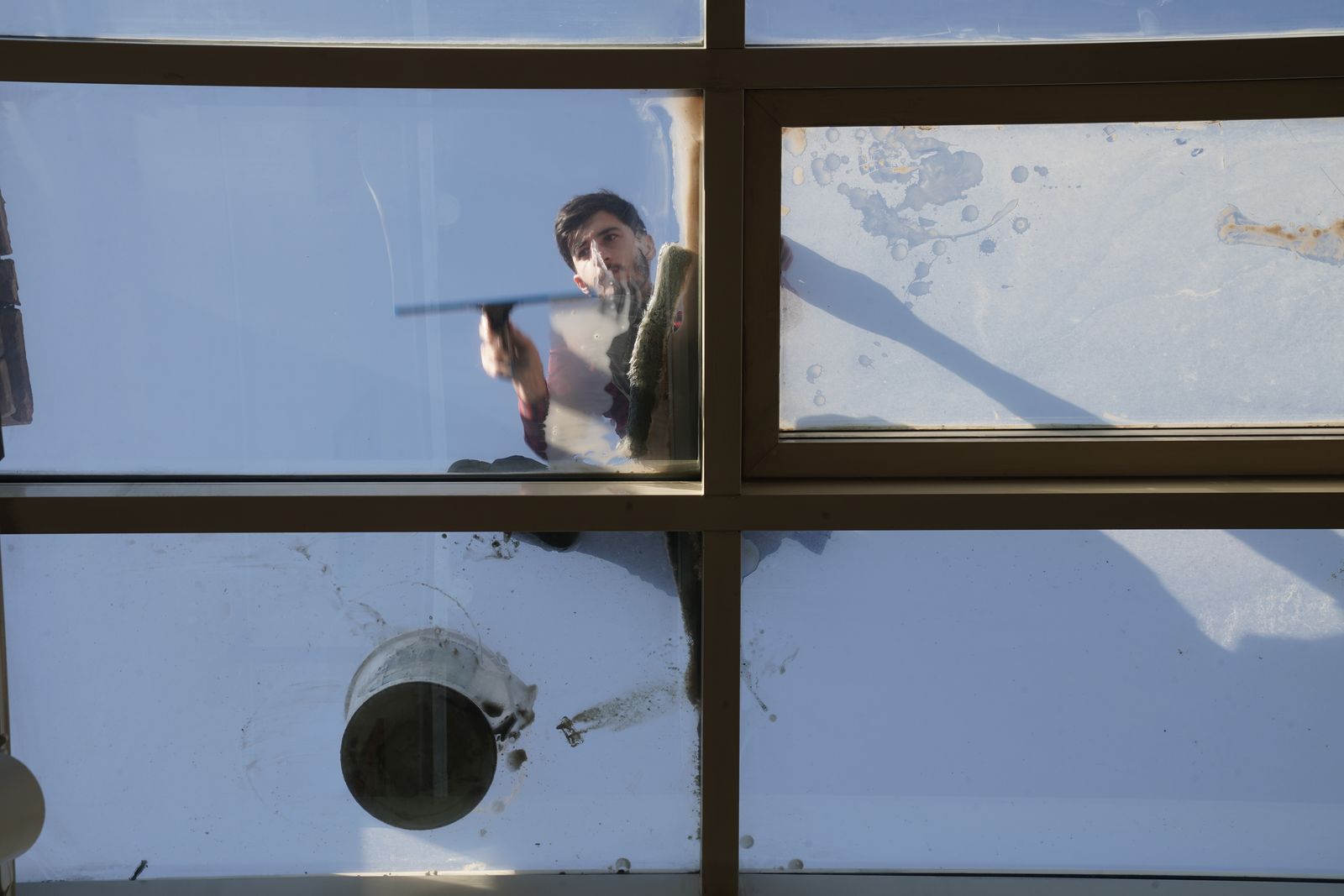
Applicator, channel squeegee and scrim. Contact work where contact is what is needed.
A washer sleeve carries a dilute neutral solution onto the glass and agitates the soil, then a brass or stainless channel squeegee with a fresh rubber pulls the water off in a controlled pattern. The perimeter is finished with a scrim or a lint-free cloth. This is the method that has cleaned glass for a century, and it is still the only one that applies real mechanical force with full control.
Frequency by environment
How often your glass needs attention is not a preference, it is a function of what lands on it. Salt, pollen, irrigation mineral and construction dust each have their own season on this coast, and each wants a different answer.
January to February
Salt aerosol, no pollen
Winter is not a break on this coast. Salt deposition runs year-round, and the low winter sun angle makes an existing film far more visible from inside a room than it is in June. Oceanfront glass still wants its eight-week visit.
Oceanfront and sound-front: keep the 8 week cycle. Inland: nothing needed.
Late February to early May
Longleaf and loblolly pollen fall
The heaviest soiling window of the year, and the one most people waste money on. Cleaning glass during the drop is cleaning it twice: a fresh yellow layer lands within days. Wooded inland lots in Leland and Brunswick Forest take the worst of it.
Do not book a full clean in March. Wait for the drop to finish.
Mid-May
Pollen has stopped falling
The single most valuable visit of the year for inland and near-coastal homes. Glass, screens, tracks and sills all come back at once, after the pollen has stopped and before the summer humidity bakes anything onto the surface.
Inland Annual clients: this is your visit. Coastal Standard: visit one of two.
June to August
Sprinkler mineral, salt aerosol, dust
Irrigation runs daily and this is when hard water damage actually happens. A droplet landing on hot glass evaporates in seconds and leaves its calcium behind. Three summers of that turns surface deposit into etch that no wash will remove.
Walk your property mid-cycle and move any head that reaches the glass.
June to November
Wind-driven salt, sand and debris
After a named storm, the first 96 hours decide whether the deposit rinses off or bonds. Wind-driven salt gets forced into tracks, weep holes and screen mesh along with sand and pine straw. Left for a fortnight, packed wet sand in a slider track has to be dug out.
Post-landfall flush within 96 hours. Plan clients get priority slots.
September to November
Leaf drop, tannin staining, gutter load
Oak drip leaves a brown tannin film on glass and sills that plain water does not shift. This is also the point where gutters fill, overflow at the corners, and start sending mineral-laden water down the wall and across the window below.
Clear gutters first, then clean glass. Doing it the other way round wastes the visit.
December
Low sun, indoor months
Exteriors can wait. Interiors cannot, because the low December sun comes straight through the glass at eye level and shows every mark. Most of our December work is interior-only visits.
Interior-only visit at plan rate. Exteriors resume in the new year.
Service areas
Each area runs on a fixed day so the drive is shared rather than billed to one household, and the recommended interval follows the distance from open water, not the size of the house.
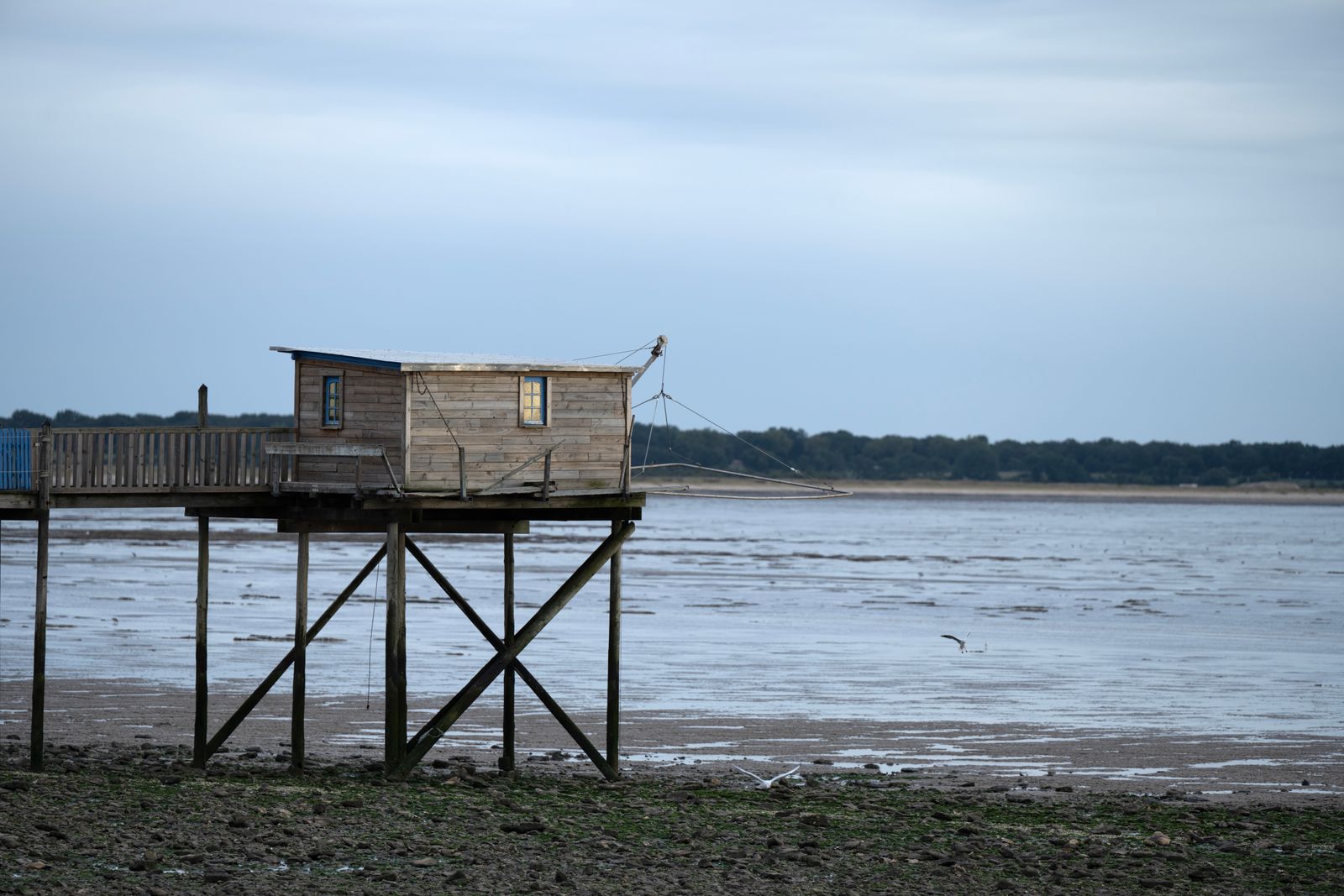
Oceanfront and sound-front glass carrying the heaviest salt load in our service area.

Historic downtown, midtown and the Cape Fear riverfront. Our home routes and commercial base.
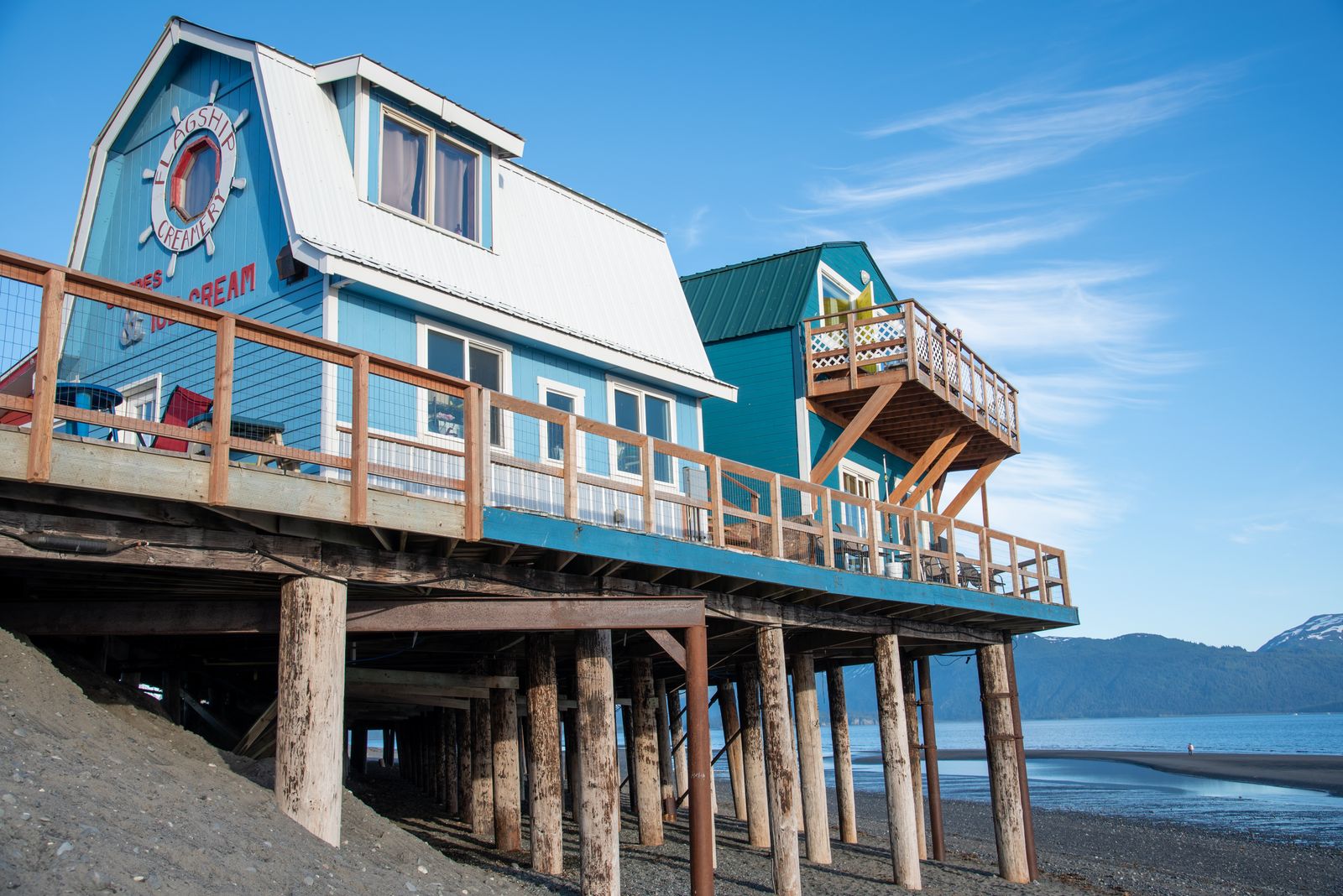
Oceanfront rentals, boardwalk businesses and Pleasure Island second homes.
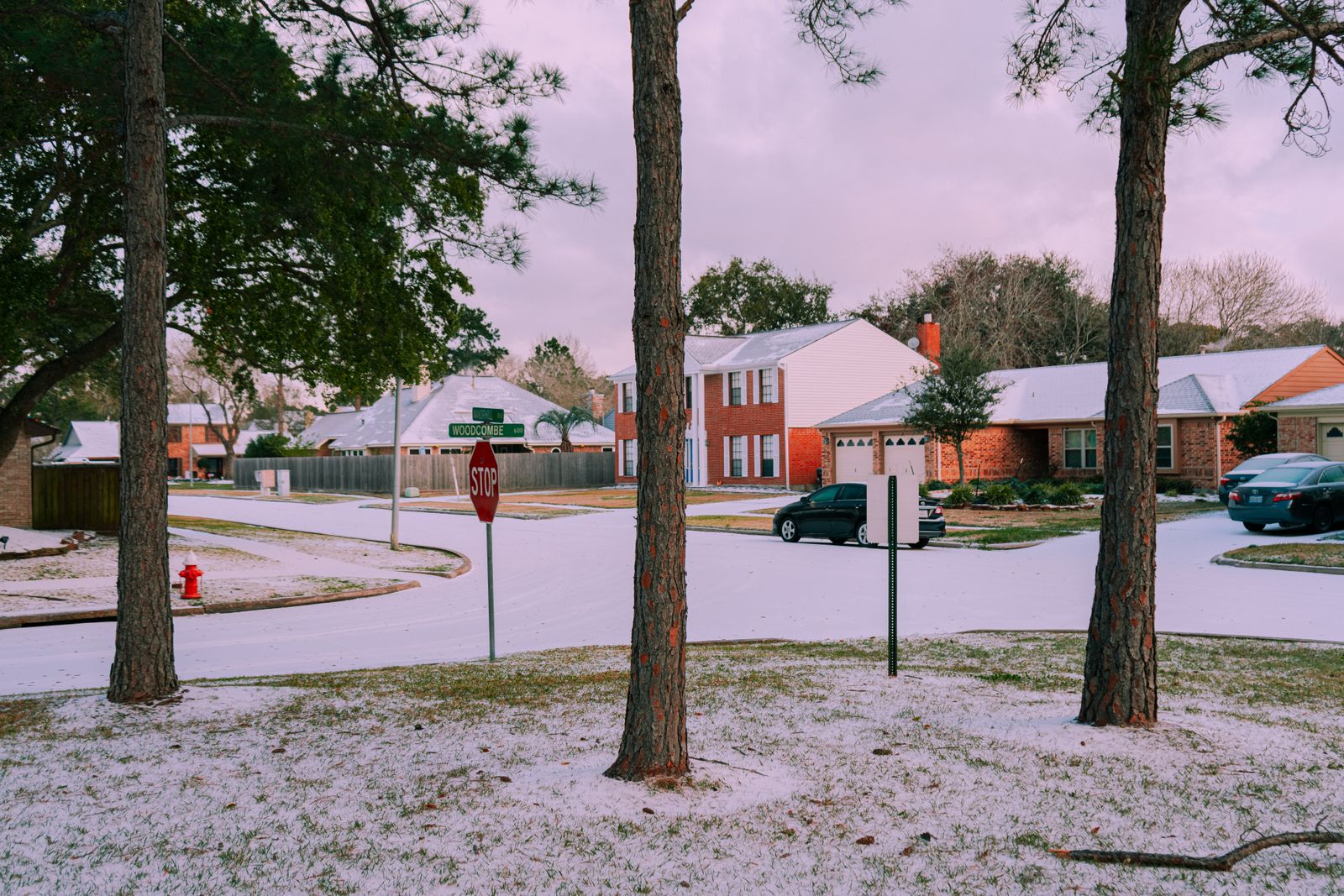
Brunswick Forest, Waterford and Magnolia Greens. Inland glass with a pollen problem, not a salt problem.
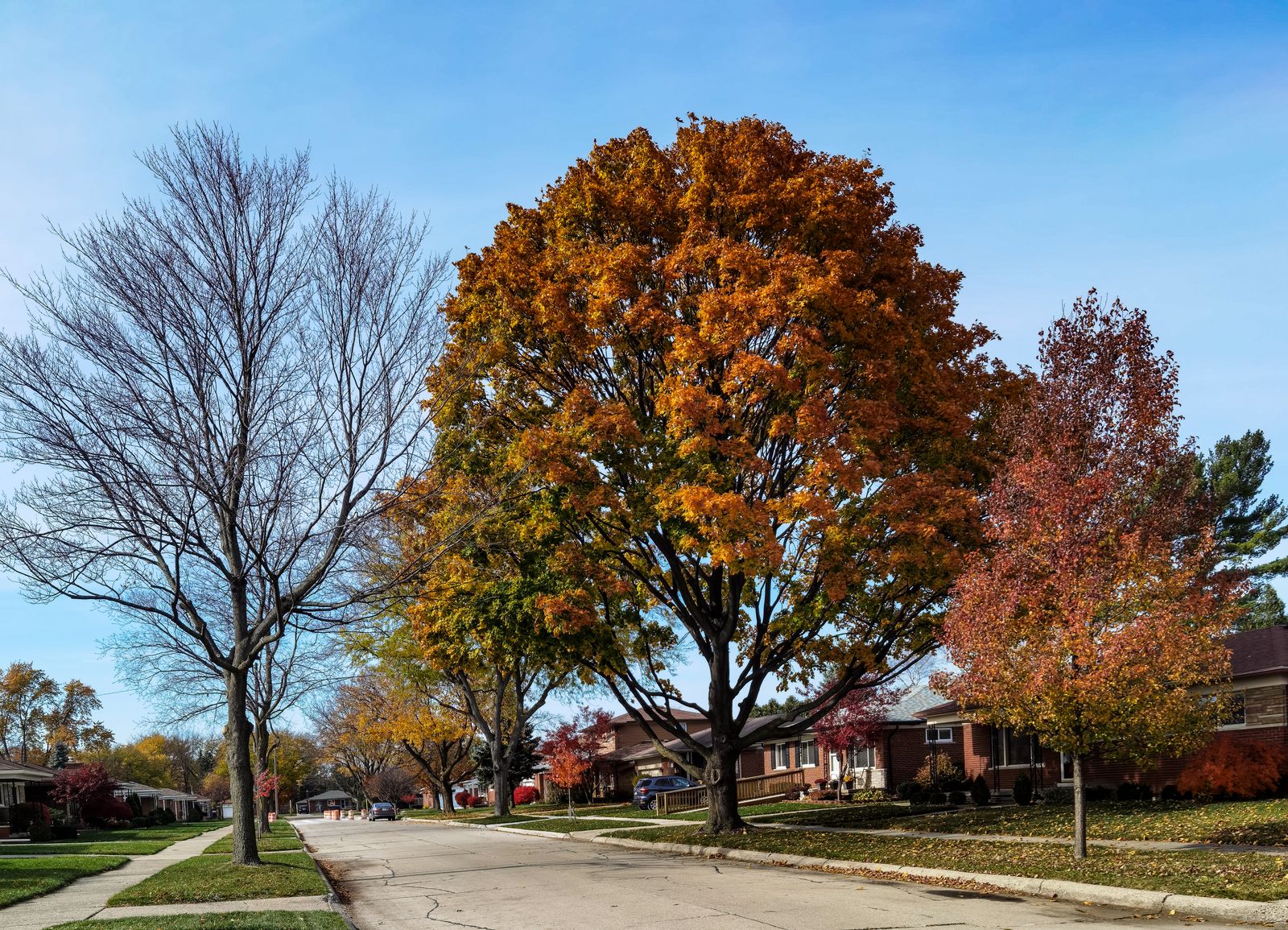
Intracoastal waterway homes, Topsail-side builds and the Olde Point corridor.

Plantation-style neighbourhoods with large glass elevations and mature tree cover.
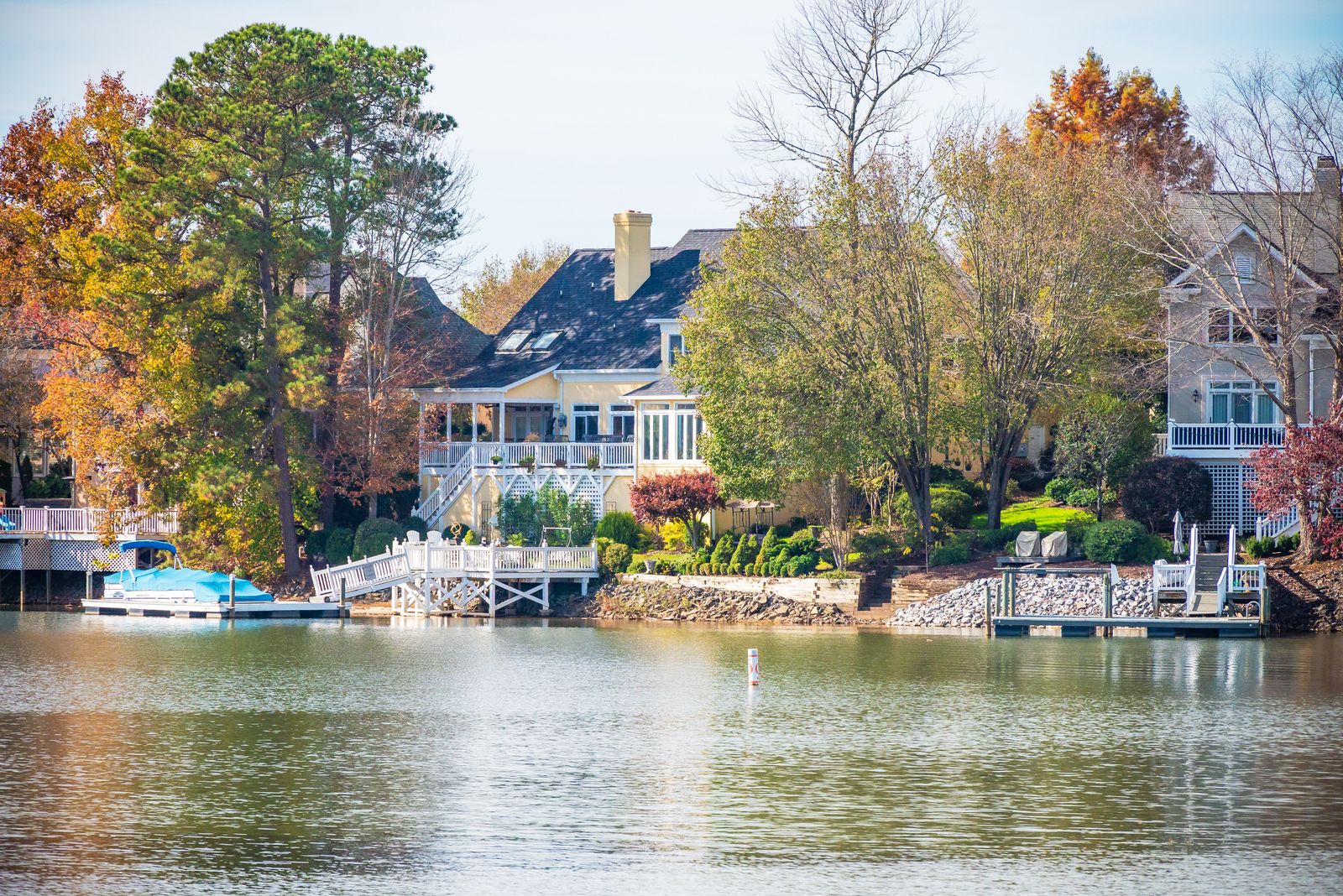
Historic waterfront cottages, river-facing porches and old annealed glass.

Free estimate
No sales visit. A technician counts the glass, checks the storey and the coating, and sends a written figure the same day.
Insured and IWCA. Certificates issued to your property manager on request.
Straight answers
If the answer you need is not here, call. You will reach a technician, not a call centre.
Two to three weeks in normal months. Mid-May is our busiest fortnight of the year because everyone wants the pollen off at once, so book that window by late April. Plan clients are scheduled automatically and never join the queue.
Not for exterior work. For interiors we need access, and most repeat clients leave a gate and garage code on file. We send a crew name and arrival window the evening before every visit.
We work in light rain because rain does not dirty clean glass. We reschedule for sustained wind over 25 mph, lightning within eight miles, or rain heavy enough to make ladder footing unsafe. You get a call, not a no-show.
A 28-pane single-storey home is usually two to three hours for interior and exterior. A 58-pane coastal build with screens and tracks runs most of a day. The estimator gives you a duration along with the price.
Salt aerosol deposits continuously on this coast and it does not need a storm to do it. Within about half a mile of open water, a visible film returns in six to eight weeks regardless of weather. That is why the Salt Line plan exists on an eight-week cycle.
Late February through early May, peaking in late March and April. Cleaning glass during the drop is money spent twice. We book spring resets for mid-May, once the yellow layer has stopped falling.

What clients actually say
Eight weeks is exactly right for our elevation. They showed me the low-angle light test and I finally understood what I was actually looking at.
Two panes came back clear, one was too far gone and they told me straight rather than taking the money. Also found the sprinkler head that caused it.
Jeanette Kowalczyk, LelandSame crew, same Tuesday, done before we open at nine. Our landlord had the insurance certificate the day I asked.
Curtis Allred, Downtown WilmingtonSplitting the waterway side and the street side into different intervals cut our bill and the glass that matters still looks new.
Tomasz Wierzbicki, HampsteadLines open now
Monday to Friday, 7:30 am to 5:30 pm. Saturday, 8:00 am to 2:00 pm. Sunday, Closed (storm callouts only).
Not a call centre. Whoever answers has cleaned glass on this coast and can tell you what your elevation needs.
Rough pane count, tallest storey, distance from open water, and whether sprinklers reach the glass. That is enough for a range.
A free count and glass check, usually within the same week. Written figure the same day, no sales visit.
We value your privacy
We use cookies to run this site, remember your preferences and understand how it is used.Cookie policy